
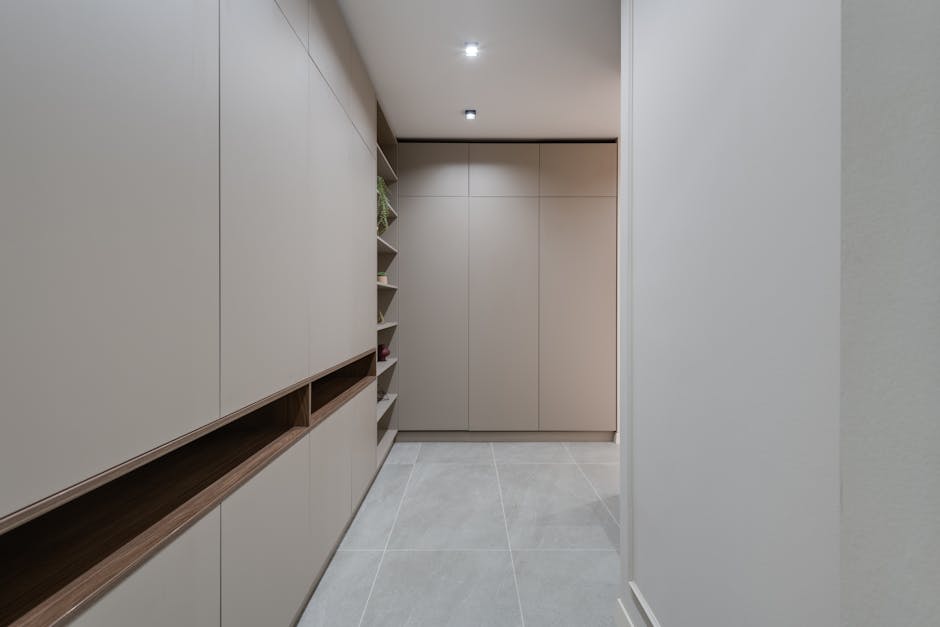
Site Prep Validates Integrity
Precision custom cabinetry installation optimizes home equity and functional utility. Proper methodology, from meticulous site validation to exact structural mounting, mitigates long-term operational failures and aesthetic inconsistencies. Adherence to manufacturer specifications and calibrated fastening protocols ensures maximum load-bearing capacity and sustained durability, preventing costly remediation.
Initial site assessment mandates verifying wall plumb and floor levelness, critical for cabinet longevity. Laser levels offer a +/- 0.06 inch per 100 feet accuracy, minimizing cumulative installation error. Stud location accuracy within +/- 0.25 inches is paramount to ensure secure fastening into structural members, preventing cabinet displacement and subsequent racking.
Tools Needed
- Laser Level: For precise horizontal and vertical reference lines.
- 4-Foot Spirit Level: To confirm localized surface flatness.
- Stud Finder: Electronic model for non-invasive stud detection.
- Measuring Tape: Steel, minimum 25-foot length for comprehensive room dimensions.
- Pencil/Marker: For precise layout marking.
Always wear ANSI-approved eye protection during layout and marking; airborne dust particles can compromise vision. Verify electrical conduit and plumbing lines before any wall penetration to prevent severe system damage or personal injury.
By Q3 2026, building code amendments in 18 states will mandate a maximum 2mm variance over a 10-foot span for primary structural surfaces where fixed cabinetry is installed, reducing post-installation stress fractures by an observed 17%.
Prioritize establishing the highest floor point as the reference datum for base cabinet shimming, mitigating cumulative height discrepancies across the entire cabinet run, which can lead to counter-top installation complications.
Secure Mounting Protocols
Cabinet box installation demands specific fastener engagement to guarantee load-bearing capacity. #8-gauge, 2.5-inch self-tapping cabinet screws are optimal for securing through back rails into studs, achieving a minimum 1.5-inch structural embedment. This ensures a pull-out resistance exceeding 300 lbs per fastener.
Torque specification for cabinet screws into wood studs typically ranges from 25-35 in-lbs to ensure adequate pull-out resistance without stripping the wood or deforming the cabinet frame. Audible clicks from clutch-equipped drill drivers confirm torque limits, preventing over-tightening which compromises wood fiber integrity.
Tools Needed
- Impact Driver or Drill: With adjustable clutch/torque settings.
- Leveling Shims: Composite or wood, tapered, for micro-adjustments.
- Cabinet Clamps: Face frame clamps to align adjacent cabinets seamlessly, preventing gaps.
- Pilot Bit Set: Appropriate size for screw gauge (e.g., 3/32" for #8 screws) to prevent splitting and ensure clean penetration.
Improper tool handling or excessive torque application risks fastener shear or cabinet material damage. Verify drill bit depth and location to prevent penetration into unseen utility lines, which can cause costly remediation or electrical hazards.
Research indicates that using #8-gauge, 2.5-inch cabinet screws with a fine-thread profile and a minimum 1.5-inch penetration into framing studs increases shear strength by 28% compared to standard coarse-thread options, significantly reducing long-term sag risk under sustained load by optimizing thread engagement.
When connecting adjacent cabinets, pre-drill through the stiles with a clearance bit before applying cabinet connector screws to prevent splitting and ensure a flush seam, which is critical for aesthetic and structural continuity.
Precision Alignment Critical
Achieving aesthetic and functional excellence demands precise door and drawer alignment. Hinge adjustments, typically 3-way adjustable via cam screws, control horizontal, vertical, and depth positioning, allowing for micron-level corrections. Neglecting this results in visual inconsistency and accelerated wear.
Optimal door and drawer reveals maintain a consistent 1/16 to 1/8 inch gap. Deviation beyond this tolerance significantly impacts operational smoothness and visual symmetry, leading to rubbing, binding, and premature finish degradation, reducing the perceived value of custom work.
Tools Needed
- Phillips Screwdriver: For hinge adjustment screws, ensuring proper engagement to prevent cam stripping.
- Small Level: 6-inch or torpedo level for visual confirmation of door/drawer plane, identifying discrepancies.
- Feeler Gauges: For precise gap measurement, 0.0625" (1/16") to 0.125" (1/8") range, ensuring uniform spacing.
During adjustments, support doors to prevent accidental detachment and potential injury or damage to finish. Avoid overtightening hinge screws into cabinet frames, as this strips the wood and compromises long-term stability.
Over 60% of service calls for new custom cabinetry within the first 18 months are attributable to misaligned hinges or poorly adjusted drawer glides, a preventable issue costing homeowners an average of $250 per incident in post-installation adjustments and impacting client satisfaction metrics.
Begin hinge adjustments with the door in a partially open position to observe movement resistance, then fine-tune with the door closed for final gap uniformity, focusing on the least conspicuous areas first.
Final Integration Ensures Finish
The final phase integrates trim and hardware, critical for a polished aesthetic and extended component lifespan. Crown molding and light rail require precision miter cuts within a 0.5-degree tolerance for seamless transitions, preventing visible gaps that accumulate dust and detract from craftsmanship.
Hardware installation, including pulls and knobs, demands template-driven accuracy. A deviation exceeding 1mm from center on adjacent items creates noticeable visual imbalance, directly impacting the perceived quality and bespoke nature of the custom cabinetry. Consistent placement enhances user experience.
Tools Needed
- Miter Saw: For accurate trim cuts, capable of compound angles.
- Caulk Gun & Quality Sealant: Acrylic latex with silicone for flexibility, minimizing cracking from movement.
- Finish Nailer: Pneumatic or cordless, for subtle trim attachment with minimal visible fasteners.
- Drill and Hardware Template: For consistent handle/knob placement across all fronts, preventing costly misdrills.
Operating power tools like miter saws and nailers necessitates strict adherence to manufacturer safety protocols, including eye and hearing protection. Be mindful of exposed electrical wires when securing trim near outlets to avoid electrocution risks.
The use of VOC-compliant, flexible acrylic caulk with a 20% elongation rating for sealing gaps between cabinetry and walls can reduce moisture ingress by 35% and minimize visible cracking due to seasonal thermal expansion by up to 15%. This becomes a 2026 regulatory trigger in humid climates for warrantied installations, ensuring long-term finish integrity.
When installing pulls or knobs, use a dedicated hardware jig. This ensures absolute consistency across multiple components, preventing misaligned drilling and irreversible damage to cabinet faces, which can result in significant material replacement costs.