
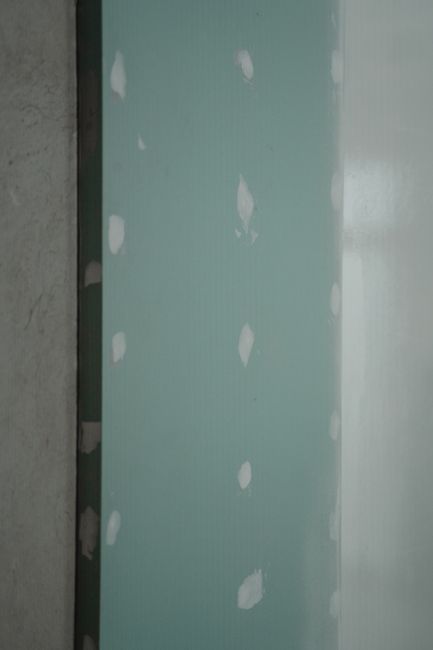
Crack Diagnostics & Tools
Drywall seam cracks require specific diagnosis to prevent recurrence. Distinguish between structural settling (requiring professional assessment) and localized joint failure. Proper material selection—fiberglass mesh tape for high-stress areas or paper tape for standard seams—dictates long-term repair integrity. Adhesion, compound type, and environmental controls are critical variables.
Pro-Tip: Examine crack origin points for signs of thermal bridging or inadequate framing support; addressing root causes prevents future failures.
Tools & Materials Checklist:
- Utility Knife: For scoring and removing loose material.
- Drywall Sanding Sponge/Pole Sander: With 100-150 grit abrasive.
- Dust Mask (N95): Safety Warning: Drywall dust contains silica; inhalation risk is high without proper respiratory protection.
- Eye Protection: Prevents particulate entry.
- 6-inch & 10-inch Drywall Taping Knives: For compound application and feathering.
- Mixing Paddle & Drill: For consistent compound viscosity.
- Fiberglass Mesh or Paper Drywall Tape: Select based on stress profile.
- All-Purpose or Setting-Type Joint Compound: Setting-type (e.g., Durabond) offers superior hardness for structural integrity, with rapid cure times (90-minute sets common).
- Primer-Sealer: Acrylic latex-based recommended.
The 2026 International Building Code (IBC) Appendix J specifically recommends a 1/8-inch gap at inside corners for optimal expansion, a detail often overlooked in residential construction, leading to stress cracks due to dynamic thermal and moisture fluctuations.
Surface Prep & Adhesion
Effective adhesion is contingent on meticulous surface preparation. Begin by scoring and removing all loose drywall tape and crumbling compound with a utility knife, ensuring clean, stable edges. A 45-degree bevel cut along the crack edge facilitates compound keying, enhancing mechanical bond strength by up to 25%. Vacuum all dust and debris from the crack and surrounding area; residual dust reduces primer efficacy by up to 40%.
Failure Point: Incomplete debris removal or unsealed porous surfaces lead to compromised adhesion, manifesting as future bubbling or crack recurrence.
Apply a high-quality acrylic latex primer-sealer to the entire repair area. This neutralizes surface porosity, prevents absorption discrepancies (flashing) in subsequent coats, and ensures uniform compound drying. Allow primer to cure fully, typically 1-2 hours, achieving a tack-free surface before tape application. New advancements in nanoparticle-infused primers (e.g., Silicate-Bonded Nano-Polymer primers) can increase joint compound adhesion by 15-20% on pre-painted surfaces, significantly reducing re-cracking probability by forming a microscopic mechanical interlock.
Compound & Tape Mastery
Select setting-type joint compound for the first coat in high-stress seam repairs; its chemical hardening process offers superior crack resistance over drying-type compounds. Mix compound to a peanut butter consistency, free of lumps, ensuring uniform application and workability. Apply a thin, even bed coat of compound over the crack, extending approximately 2 inches beyond each side.
Pro-Tip: For optimal adhesion, embed fiberglass mesh tape immediately into the wet compound with a 6-inch knife, pressing firmly to extrude compound through the mesh openings; this ensures a monolithic bond.
Fiberglass mesh tape, particularly self-adhesive variants with a 9x9 weave count per square inch, exhibits a 30% higher tensile strength against shearing forces compared to standard paper tape, making it crucial for dynamic structural seams where movement causes recurrent cracks. Ensure tape is centered over the seam with no overlap. Apply a thin skim coat over the embedded tape, feathering edges smoothly. Allow this coat to cure completely per manufacturer specifications; forced drying with heat guns can induce hairline cracks from rapid moisture loss. Subsequent coats should progressively widen, feathering out 8-10 inches from the seam center, maintaining a minimal compound thickness to reduce shrinkage and cracking risk.
Finishing & Durability Protocol
Achieving an undetectable finish requires meticulous sanding and layering. After each compound coat dries, sand lightly with a 150-grit sanding sponge to remove imperfections, ensuring a smooth, level surface. The goal is a seamless transition between the repair and existing drywall, without visible ridges or depressions. Apply a minimum of three compound coats: the first to embed tape, the second to level, and the third for final feathering and surface perfection. Each successive coat should be wider than the last, tapering to a razor-thin edge.
Risk Management: Over-sanding can expose tape or create new depressions, requiring additional compound application and increasing project time by up to 50%.
For a Level 5 drywall finish, as per Gypsum Association GA-216-2021 standards, a minimum of three compound coats with specific 120-150 grit sanding is required for 98% surface uniformity and maximum light reflection consistency. After final sanding, clean all dust and apply a second coat of primer-sealer to ensure uniform paint absorption. This prevents flashing and uneven sheen, critical for high-visibility areas. Environmental control during curing is paramount; maintain relative humidity between 40-60% to prevent rapid drying that can compromise compound integrity. Allow final primer to cure for 24 hours before painting for optimal paint adhesion and longevity.