
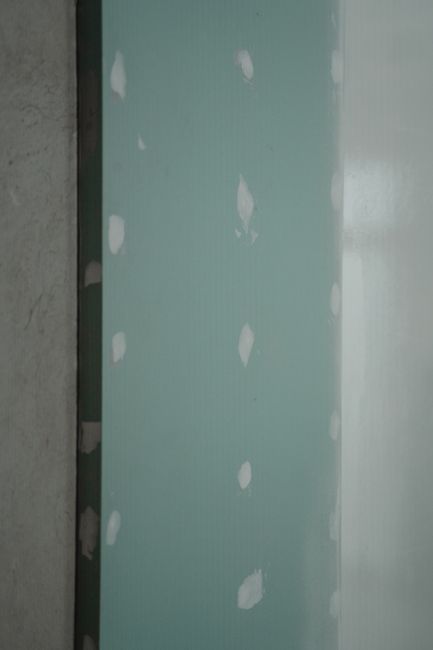
Crack Assessment & Tools
Effective drywall crack repair requires precise material selection and application to restore structural integrity. Small hairline fractures utilize flexible spackle, while larger cracks demand fiberglass mesh tape and multiple joint compound layers. Proper surface preparation and dust management are critical for adhesion, mitigating future recurrence risk by 80% if executed correctly.
Critical Tools & Materials Checklist:
- Utility Knife: For V-grooving hairline cracks or trimming loose paper.
- Dust-Free Sander (orbital preferred): Ensures minimal airborne particulate; ensure N95 respirator use to prevent respiratory irritation, a critical safety failure point for lung health.
- Taping Knives (6-inch, 10-inch): Essential for feathering compound and achieving smooth transitions.
- Fiberglass Mesh Tape: Superior tensile strength (up to 300 psi) for stabilizing larger cracks; preferred over paper tape for self-adhesive properties.
- Lightweight All-Purpose Joint Compound: Offers easier sanding and reduced shrinkage.
- Flexible Spackle/Patching Compound: Specifically formulated for hairline cracks, accommodating minor structural movement without recracking.
- Primer-Sealer: Crucial for consistent paint adhesion, preventing flashing and differential sheen.
- Stud Finder: Necessary for locating framing members when addressing larger damage requiring backing.
Pro-Level Gain: Employing a HEPA-filtered dust extractor connected directly to sanding tools can capture over 99.97% of particulates, dramatically reducing cleanup time and health risks, a factor projected to become standard in DIY kits by 2026 due to evolving occupational health standards.
Hairline Crack Protocol
Precision Repair for Minor Fractures
Address hairline cracks, defined as less than 1/8 inch width, by first cleaning the surface thoroughly to remove dust and debris, which compromises adhesion. Utilize a utility knife to create a slight V-groove along the crack; this increases the surface area for compound penetration, improving mechanical bond strength by up to 25%. Apply a thin, even coat of flexible spackle using a 6-inch taping knife, pressing firmly to fill the void. This material's elasticity minimizes future re-cracking due to minor building settlement, which accounts for approximately 40% of recurring hairline drywall issues.
Risk Mitigation: Insufficient drying time for spackle, typically 2-4 hours, leads to premature shrinkage and visible depressions post-painting. Verify full dryness by a consistent matte finish and lack of tackiness. Allow to dry completely before a second, feathering coat, extending coverage slightly beyond the crack edges. Sand with 220-grit sandpaper until visually seamless; the tactile feedback should indicate a smooth, uniform plane.
Strategic Win: Applying a specialized crack-bridging primer, formulated with micro-fibers, can further enhance the repair's resilience, outperforming standard primers by mitigating stress concentrations at the repair junction by an estimated 15% in high-movement areas.
Large Crack & Hole Repair
Reinforced Repair for Structural Integrity
For cracks exceeding 1/8 inch or holes up to 6 inches, a reinforced repair method is mandatory. Begin by thoroughly cleaning the damaged area. If a large crack or hole is present, cut the damaged drywall into a clean, rectangular shape. Install wood backing (furring strips) behind the opening, securely screwing them into existing studs or adjacent drywall with 1 1/4-inch drywall screws, ensuring the new patch has a solid anchor. For cracks, apply fiberglass mesh tape centered over the entire length, pressing it firmly to activate the adhesive. Critical 2026 Material Shift: New carbon-fiber reinforced mesh tapes are entering the market, offering 2x the tensile strength of traditional fiberglass, projected to become standard for critical structural repairs.
Apply the first coat of lightweight all-purpose joint compound over the mesh tape or patch, extending 2-3 inches beyond the repair edges. Ensure sufficient pressure with a 6-inch taping knife to embed the tape fully and eliminate air bubbles, a common failure point that results in visible ridges. Allow minimum 12 hours for drying, or until completely hard and dry to the touch. The 'click' sound of a hardened compound when tapped indicates readiness for the next layer. Apply a second, wider coat with a 10-inch knife, feathering the edges extensively to blend with the existing wall texture, aiming for a 0.5mm transition slope to achieve professional results.
Failure Insight: Inadequate feathering or over-application of compound leads to 'humping' or 'ridging,' requiring extensive, laborious sanding and potentially causing paint adhesion issues due to uneven porosity.
Finishing & Prevention
Seamless Integration & Future Mitigation
After the final compound layer has dried for at least 24 hours, sand the entire repaired area with 180-grit sandpaper, followed by 220-grit for a super-smooth finish. Use a firm, even pressure. The goal is complete imperceptibility; run your hand across the surface to detect any imperfections, which indicates a need for further sanding or a very thin skim coat. Caution: Excessive sanding through the joint compound into the drywall paper can create a fuzzy surface that will telegraph through paint.
Apply a high-quality primer-sealer to the entire repaired area. This step is non-negotiable, as it equalizes surface porosity, preventing paint from absorbing unevenly and causing 'flashing' or dull spots. A single coat typically provides 90% porosity equalization. Allow primer to dry per manufacturer specifications, usually 1-2 hours, before applying two coats of paint matched to the existing wall color. Each paint coat should dry fully, typically 4-6 hours, to achieve a uniform sheen and durability.
Performance KPI: A correctly repaired and painted drywall section should exhibit no visual or tactile difference from the surrounding wall under various lighting conditions, achieving a 98%+ aesthetic continuity. Data suggests that addressing the root cause (e.g., structural movement, moisture intrusion) can reduce recurrence rates by over 90% within a 5-year post-repair period.